For years, ecommerce brands have focused on one core goal: ranking higher in Google search results. But the experience of finding products online is shifting in ways that make rankings only part of the picture.
AI-powered search experiences, including Google's AI Overviews, ChatGPT Shopping, Perplexity, and Gemini, increasingly summarise information, compare products, and answer buyer questions directly on the search page. A growing share of Google searches now end without a click, with AI Overviews contributing to that trend by resolving questions before users need to visit a website.
For small ecommerce businesses, this raises a practical question: if a potential customer asks an AI tool to recommend the best product in your category, is your brand part of the answer?
This article explains what AI search visibility means, why it matters for ecommerce, and what steps may help improve it without abandoning the SEO fundamentals that still apply.
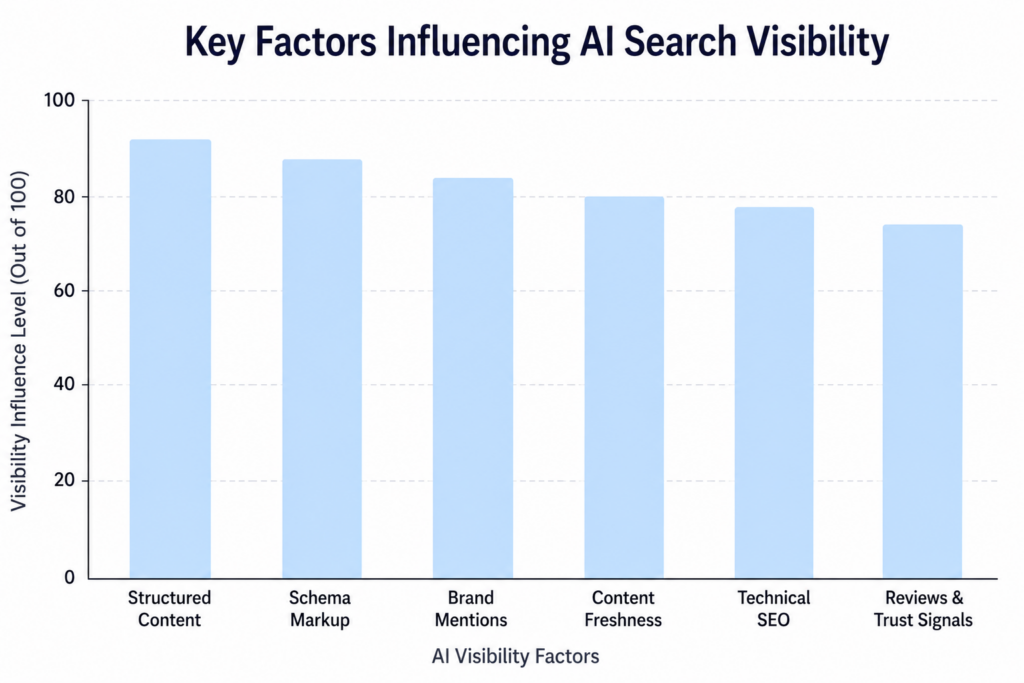
Usage trends across ecommerce and search platforms suggest that AI search visibility increasingly depends on structured, answer-focused content rather than traditional rankings alone. Brands with strong schema markup, updated product information, third-party trust signals, and technically sound websites are better positioned to appear in AI-generated recommendations and search summaries.
AI search visibility refers to how often and how accurately your brand, products, and content appear in AI-generated answers, summaries, recommendations, and citation-based results across platforms such as Google AI Overviews, ChatGPT, Perplexity, and Gemini.
Unlike traditional SEO, which focuses on helping ecommerce brands rank in search results, AI search visibility is about whether AI systems can understand your brand, surface your products, cite your content, and recommend you for relevant shopping queries.
The distinction is worth noting. You can rank well organically while remaining largely absent from AI-generated answers. Research from Seer Interactive (January 2025), which analyzed around 10,000 queries across ChatGPT, found that brands ranking on Google's page one showed a strong correlation with LLM mentions, while backlinks had little to no impact. The finding suggests that organic rankings and AI citation behavior are connected, but that link building alone is insufficient to drive AI visibility.
Shoppers increasingly research products across multiple touchpoints before deciding to buy, and AI tools are becoming a more common part of that process. AI Overviews appear on a meaningful share of Google search results, and platforms like ChatGPT, Perplexity, and Claude are increasingly part of everyday research behavior. According to a Datos/SparkToro Q4 2025 report, US desktop Google searches per user fell nearly 20% year over year, while referral data tracked by Chartbeat showed Google search traffic to publishers declining by about a third over the same period. In parallel, AI-sourced referral sessions grew substantially. Search Engine Land reported a 527% year-over-year increase in the first half of 2025, though total AI platform traffic still represents a small share of overall web traffic.
For ecommerce brands, appearing in these answers may support:
AI visibility does not automatically translate to sales. The practical goal for ecommerce teams is to understand whether AI visibility leads to traffic, new customers, repeat buyers, and revenue, not just mentions. That measurement work is still developing, but the channel itself is maturing quickly.
AI search tools do not simply rank pages. They synthesize information from multiple sources, assess credibility, and construct answers. This changes what it means to be "visible" in search.
Research from AirOps and Kevin Indig (2026 State of AI Search report) found that roughly 60% of AI Overview citations came from URLs that did not rank in the top 20 organic results, suggesting that content quality and structure may matter more than raw ranking position when it comes to being cited. The same research also found that pages ranking first in Google were cited by ChatGPT at 3.5 times the rate of pages outside the top 20, indicating that strong organic performance still provides an underlying advantage, even when it does not guarantee citation.
Industry analysis has also found that only a minority of brands maintain consistent visibility from one AI answer to the next, and fewer still remain present across multiple consecutive queries on the same topic. Pages not updated regularly tend to lose citations more readily.
The practical implication for ecommerce brands is that AI search visibility can be less stable and harder to predict than organic rankings. It tends to reward consistent, well-structured, regularly updated content and can work against vague or outdated pages.
AI systems generally look for content that is clear, useful, and easy to understand. For ecommerce brands, this means product pages, category pages, FAQs, and guides are stronger candidates when they directly answer real buyer questions.
AI visibility can also depend on trust signals. Updated product details, reviews, third-party mentions, schema markup, and crawlable pages can help AI tools better understand and reference your brand.
Factors that may support AI search visibility include:
Sequential headings and rich schema appear to correlate with higher citation rates, and brands earning both mention signals and citation signals tend to show a higher likelihood of reappearing in AI answers over time.
Improving content for AI search does not require abandoning traditional SEO. In many cases, the two goals reinforce each other: an FAQ section built to answer buyer questions can earn featured snippets, and buying guides that address research queries can support both organic rankings and AI citations. The key shift is moving from content designed to rank toward content designed to answer.
Practical approaches worth considering:
Analysis from BrightEdge (February 2025 – February 2026), tracking citation patterns across nine industries, found that only around 17% of sources cited in AI Overviews also ranked in the organic top 10, meaning roughly five out of six AI Overview citations came from content not on page one of traditional results. This suggests that structured, answer-ready content can support discoverability for smaller brands without dominant organic rankings, though the pattern varies significantly by industry.
AI search visibility does not reduce the need for solid technical SEO. AI systems still rely on search engine infrastructure to crawl, index, and evaluate your website. If your pages are slow, poorly structured, or difficult to index, they are less likely to be retrieved and cited regardless of content quality.
Technical areas worth reviewing:
Google's developer documentation on AI features confirms that AI-generated search experiences draw on the same indexing and quality evaluation systems as traditional search. A technically sound site provides the foundation for most other improvements.
Measurement in this area is still developing, and no single metric gives the full picture. AI search visibility is not only about whether your brand appears in an AI-generated answer, but it is also about whether those appearances contribute to better brand awareness, more qualified traffic, stronger engagement, and eventually more sales or inquiries.
A practical approach is to combine traditional SEO metrics with newer AI-focused signals. This helps ecommerce brands understand whether their content is being found, cited, and trusted across both search engines and AI platforms. Since AI visibility can fluctuate, reviewing these signals regularly is more useful than relying on a single report or snapshot.
Metrics worth tracking:
Visibility in AI search tends to fluctuate; credibility is increasingly earned off-site through mentions, citations, and third-party references rather than rankings alone. Building a measurement approach that accounts for this volatility is worthwhile, even if the complete picture is still developing.
Several patterns tend to reduce AI search visibility for ecommerce brands. Many of these issues occur when content is written primarily for rankings rather than for real buyer questions. AI systems generally need clear, useful, and trustworthy information before they can include a brand in summaries, comparisons, or recommendations.
Keeping your website technically clean and your brand information consistent across platforms also matters. Even well-written content may be overlooked if product pages are thin, schema is missing, reviews are limited, or business details are inconsistent across directories and listings.
Improving AI search visibility does not require rebuilding your entire SEO strategy. Start with your most important pages and work outward.
Improving AI search visibility often requires more than publishing new content. Ecommerce brands also need clean technical SEO, structured product data, clear analytics, fast-loading pages, reliable internal links, and strong trust signals. The following plugins can support those areas when configured correctly.
It is worth being clear about what plugins can and cannot do here. None of these tools replaces a content strategy or a technical audit; they make certain tasks easier to manage, not unnecessary. The right choice depends on your existing setup and schema requirements. As with any WordPress plugin, test in a staging environment before deploying to a live site to reduce the risk of conflicts with existing theme or plugin configurations.
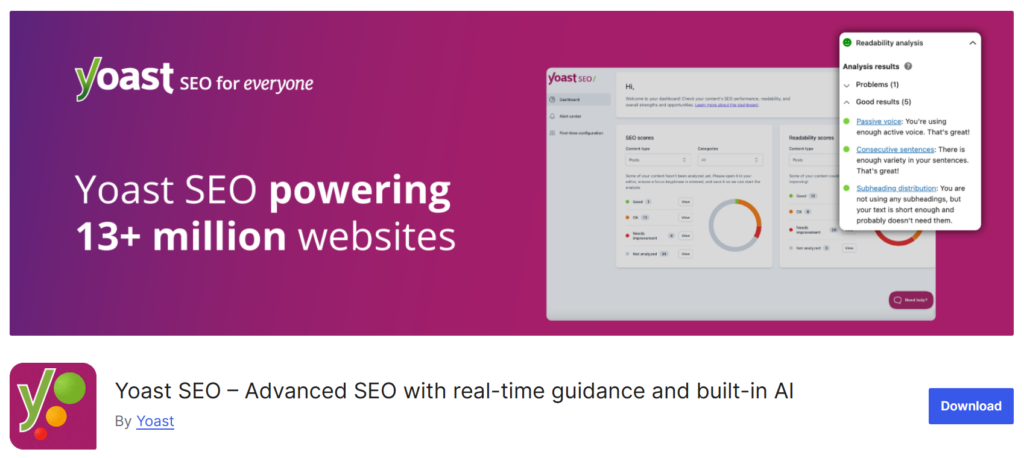
Yoast SEO is a WordPress SEO plugin that helps site owners manage on-page optimization, metadata, readability, and basic technical SEO. For ecommerce brands, it can support clearer content structure and more consistent search visibility across product, category, and informational pages. It suits teams that want straightforward readability feedback alongside metadata management.
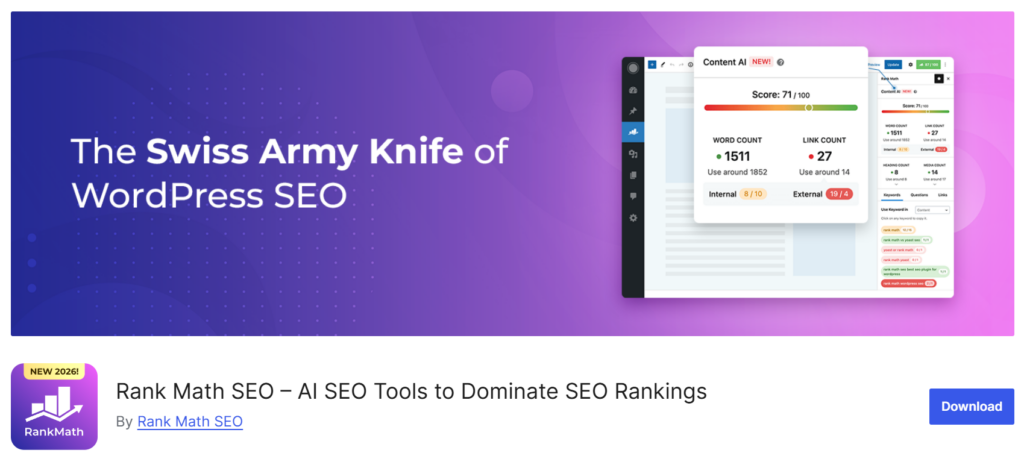
Rank Math SEO is an SEO plugin designed to help WordPress users manage metadata, schema, sitemaps, and content optimization from one dashboard. It is useful for brands that want more direct control over how product and content pages are structured for search engines, particularly those with more complex schema requirements.
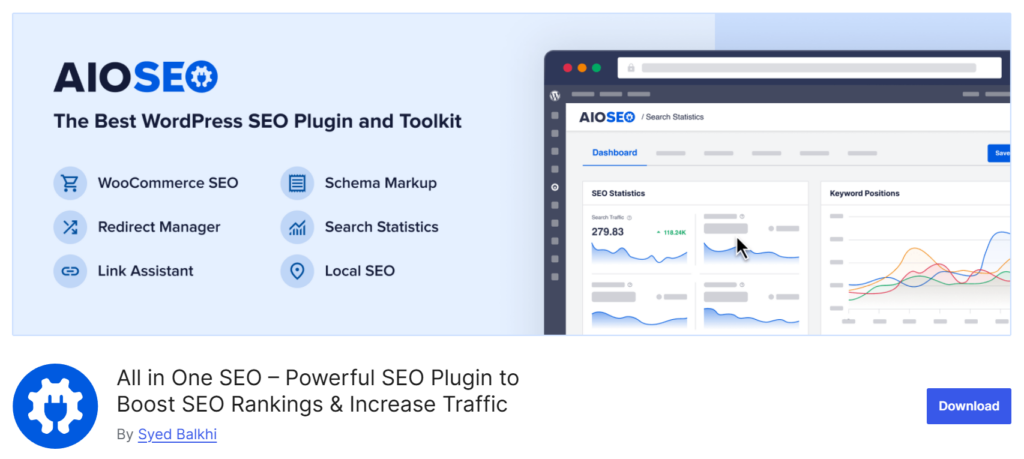
All in One SEO helps WordPress site owners manage important SEO settings, including metadata, sitemaps, schema, and WooCommerce-specific SEO. It can be a practical option for ecommerce teams that want a broad SEO toolkit without handling every technical setting manually.
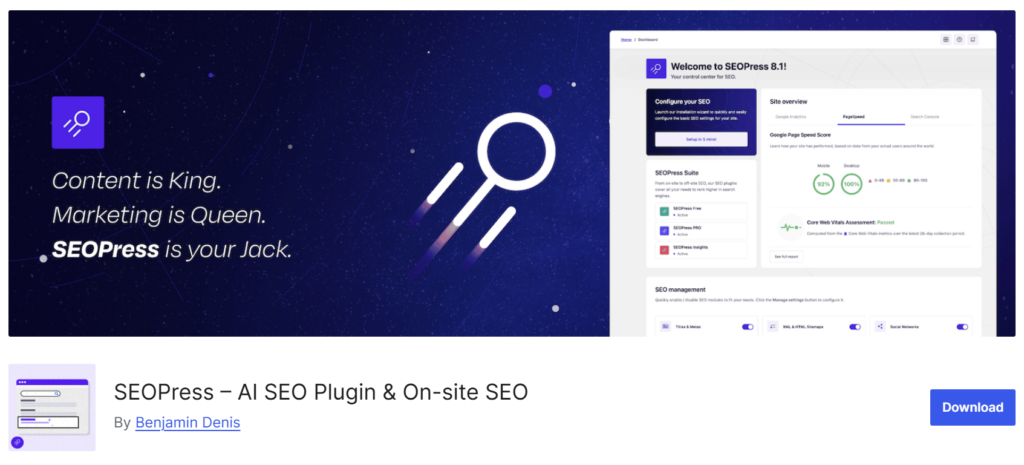
SEOPress is a WordPress SEO plugin that helps manage titles, meta descriptions, sitemaps, social previews, and structured data. It can support AI search visibility by helping brands produce cleaner metadata and more organized content signals.
AI search visibility is not a separate strategy from good SEO; it is an extension of it, applied to a shifting landscape. The brands that tend to appear in AI-generated answers are generally those that have invested over time in clear, helpful, well-structured content and technically sound websites.
A useful starting point for most ecommerce businesses is an honest audit of existing content and technical foundations. Identifying gaps in how clearly your product pages answer buyer questions, verifying that schema is properly implemented, and beginning to track traffic from AI referral sources alongside traditional metrics are practical first steps that don't require a major overhaul.
Visibility today is increasingly shaped by the strength, consistency, and authority of your entire digital presence, not just where you rank on any given day. Ecommerce brands best positioned to benefit from these shifts are generally those already committed to publishing accurate, helpful content and maintaining a technically sound site. A structured content and technical audit, whether handled internally or with outside support, is a reasonable place to begin if either area has gaps.
"*" indicates required fields
"*" indicates required fields
"*" indicates required fields