More of your potential customers are starting their shopping research in an AI tool rather than in a search box. They ask ChatGPT for the best option in a category, let Perplexity compare a few products, or read a Google AI Overview before they ever click a link. If your store is not part of those answers, you can lose a sale without ever knowing the shopper existed.
The good news is you don't need to throw out your existing SEO work. Most of what makes content useful to a person also makes it useful to an AI model. This guide walks through what is changing, how AI search differs from traditional search, and the practical steps an ecommerce store owner can take to appear in AI search results.
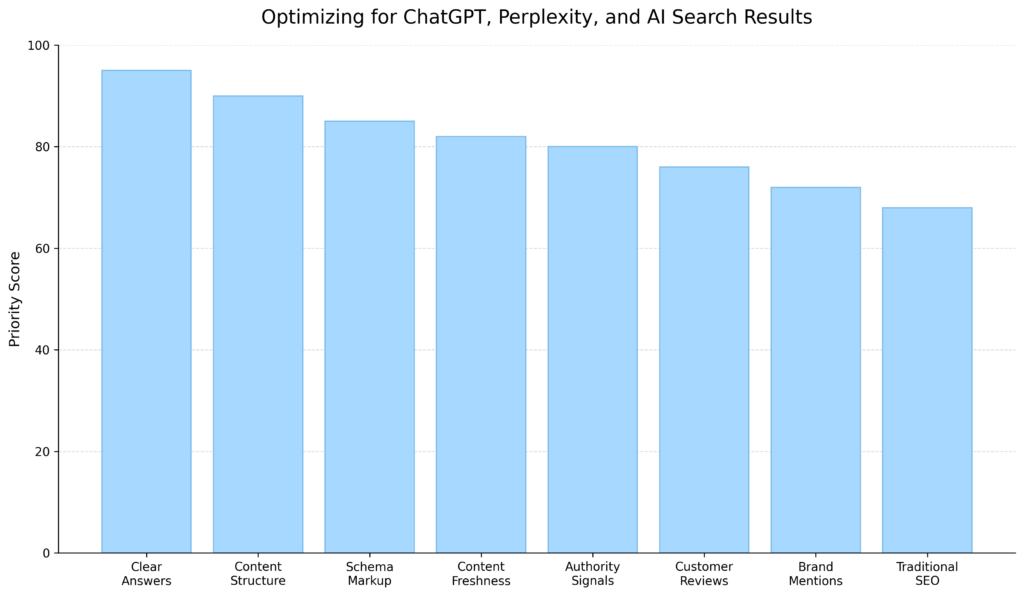
As AI search platforms such as ChatGPT and Perplexity become a larger part of the buyer journey, content quality and structure matter more than traditional ranking signals alone. Clear answers, well-organized content, schema markup, and topical authority are increasingly influencing whether a brand appears in AI-generated responses. Businesses that optimize for AI citation and answer generation are better positioned to gain visibility as search behavior shifts toward conversational AI experiences.
Search is shifting from a list of links to a synthesized answer. Instead of opening several tabs, comparing product pages, and reading multiple reviews, many shoppers now ask one detailed question and expect the tool to summarize the best options. That means the website visit is no longer always the first step in the buying journey. In some cases, the AI answer becomes the first impression, the comparison tool, and the recommendation engine all at once.
For ecommerce stores, this changes how visibility works. Ranking on Google still matters, but being included as a trusted source in an AI-generated answer is becoming more important. If your product information is clear, accurate, well-structured, and supported by useful details, AI tools are more likely to understand and reference it. If your content is vague, outdated, or difficult to crawl, your store may be left out even when your products are relevant.
A few figures help put the shift in context, though they are projections and estimates rather than guarantees:
Treat these as directional signals. The underlying point is steady: a meaningful and growing slice of buying research now happens through AI tools, and ecommerce stores that make their content easy to understand tend to benefit from that shift.
Traditional SEO focuses on helping a page rank well in search results so users can choose which link to click. AI search works differently because the tool often creates a complete answer before the shopper visits any website. Instead of simply matching keywords to pages, AI systems look for clear, trustworthy information they can summarize, compare, and cite. This means your content needs to be easy to understand, well-organized, and presented in smaller, useful sections.
AI search optimization, sometimes called generative engine optimization or GEO, is less about repeating keywords and more about becoming a reliable source inside the answer. For ecommerce stores, that means product pages, category pages, FAQs, and guides should answer real buying questions directly. A page can still benefit from traditional SEO, but it also needs enough clarity, context, and supporting details for AI tools to include it confidently in a recommendation.
Key differences include:
Start with a handful of changes that often have the most impact for ecommerce sites. None require a full rebuild, and most also improve your standard SEO and conversion rates.
First, confirm that AI crawlers aren't blocked. Check your robots.txt file at yourstore.com/robots.txt and look for rules that disallow common AI crawlers such as GPTBot, CCBot, or ClaudeBot. For most ecommerce stores, allowing these crawlers is worth considering, since blocking them keeps your products out of the models that may recommend them.
One implementation note: GPTBot is OpenAI's primary crawler, while CCBot is used by Common Crawl, which trains several open models. If you want to be selective, you can allow GPTBot and ClaudeBot while still blocking CCBot, though a blanket allow is the simpler path for most stores.
Also confirm that your key content is visible in the raw HTML. Some AI crawlers do not run JavaScript reliably, so product details, prices, or FAQs that load only through client-side scripts may not be visible to them. Server-rendered or statically generated content is the safer choice for anything you want cited. You can verify this by viewing your page source: right-click and select View Page Source, then check whether the text appears before JavaScript executes.
AI systems pull content in chunks, so each section should stand on its own. A practical pattern is to lead with a short, direct answer of roughly 40 to 80 words, then expand on it below.
This structure gives the model a clear, self-contained block to work with and tends to help human scanners, too. If you are auditing existing pages, a quick test is to ask ChatGPT or Perplexity the main question your page is supposed to answer and see whether your content gets cited.
Vague copy is harder to cite. Concrete, attributable details give AI something solid to reference. Where you can, replace soft phrases like "loved by many customers" with specifics such as a verified review count, a measured battery life, exact dimensions, or shipping timeframes.
Research on AI citation patterns suggests that higher fact density can increase how often content is referenced. The effect tends to be larger for sites that aren't already dominant in their category, since authority alone isn't enough when the underlying content is thin. Keep any numbers real and sourced. Invented precision tends to erode trust with both readers and the models trained to recognize it.
Schema markup is one of the more direct ways to communicate with AI systems. It labels your content, reducing guesswork and helping prevent an AI from misrepresenting details about your products.
If you run WooCommerce, you can handle much of this through your theme or a dedicated schema plugin, so it is often a one-time setup task rather than ongoing work. After implementing the schema, use Google's Rich Results Test at search.google.com/test/rich-results to verify the markup is valid before assuming it is working.
AI models tend to favor sources and products that appear repeatedly across the web because that repetition reads as independent verification. For an ecommerce brand, that means your reputation outside your own site matters.
This is a slower lever than on-page work, but it often separates stores that get recommended from those that get overlooked.
AI tools often favor recent information. An outdated stat or a discontinued product can cause your content to be passed over. It helps to review your highest-traffic pages on a regular schedule and update the data, examples, and product details rather than only changing the "last updated" date. Updating a timestamp without substantive content changes is unlikely to improve citation rates.
Perplexity and ChatGPT both help users research products, compare options, and make buying decisions, but they don't always find and present information the same way. Perplexity behaves more like an AI-powered search engine because it relies heavily on live web results and clearly shows source links. That means fresh content, crawlable pages, clear publish dates, and solid technical SEO can carry more weight there.
ChatGPT works a little differently. It may combine live search with broader learned context, so it often pays more attention to overall authority, clear explanations, structured content, and whether your information reads as reliable and neutral. For ecommerce stores, this means your product pages should be written so AI tools can summarize and recommend them, not just optimized for traditional keyword matching.
A few practical differences to keep in mind:
The most practical approach is to build one strong foundation and adjust as needed. Make your product data accurate, your content easy to scan, and your answers direct enough for AI tools to reference. From there, you can layer in platform-specific improvements such as updating content more frequently for Perplexity or deepening topical coverage for ChatGPT.
There is no AI equivalent of Search Console yet, so measuring AI visibility is still more manual than traditional SEO reporting. You will not always see a clean dashboard showing which AI tool mentioned your store, which answer included your product, or how many shoppers saw that recommendation. Because of that, the most practical approach is to track visibility directly and look for patterns over time rather than relying on one isolated test.
Start by testing the questions your real buyers are likely to ask. Include product comparisons, category questions, budget-based searches, and problem-based queries. For example, instead of only checking your brand name, ask questions like "What is a good mattress for side sleepers under $1,000?" or "Which skincare products work well for sensitive skin?" Then note whether your store appears, which competitors are mentioned, and what type of content the AI uses as a source.
A practical tracking process can include:
If competitors keep showing up where you do not, that gap usually points to a specific issue. Your content may not answer the question clearly, your product data may be too thin, your pages may lack schema, or your brand may need more reviews and outside mentions. Each missing appearance is a signal worth investigating. The goal is not only to get more traffic but to make your store easier for AI tools to find, understand, trust, and recommend.
The right plugins will not replace a strong content strategy, but they can make the technical side of AI search optimization more manageable. For ecommerce stores, the most useful tools typically support schema markup, product data accuracy, reviews, site speed, content structure, and crawlability. These plugins can help make your store easier for search engines and AI tools to read, understand, and recommend.
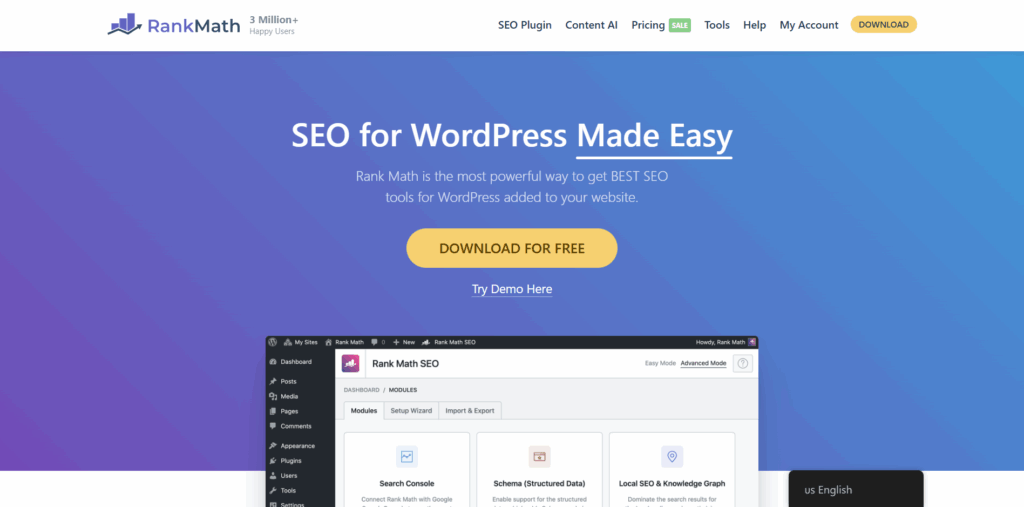
Rank Math SEO is a widely used SEO plugin that helps ecommerce stores manage metadata, schema, redirects, sitemaps, and on-page optimization. For AI search readiness, it helps structure your pages clearly and gives search engines more context about your products, categories, and content.
Features:
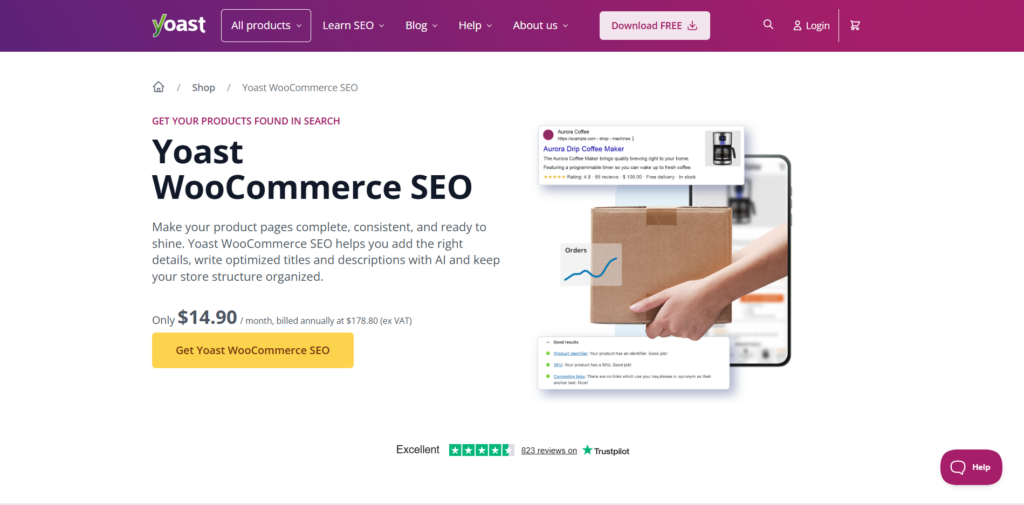
Yoast WooCommerce SEO is designed for WooCommerce stores that want better product visibility in search. It helps connect product data to structured information, so search engines can better understand key details such as products, attributes, pricing, and availability.
Features:
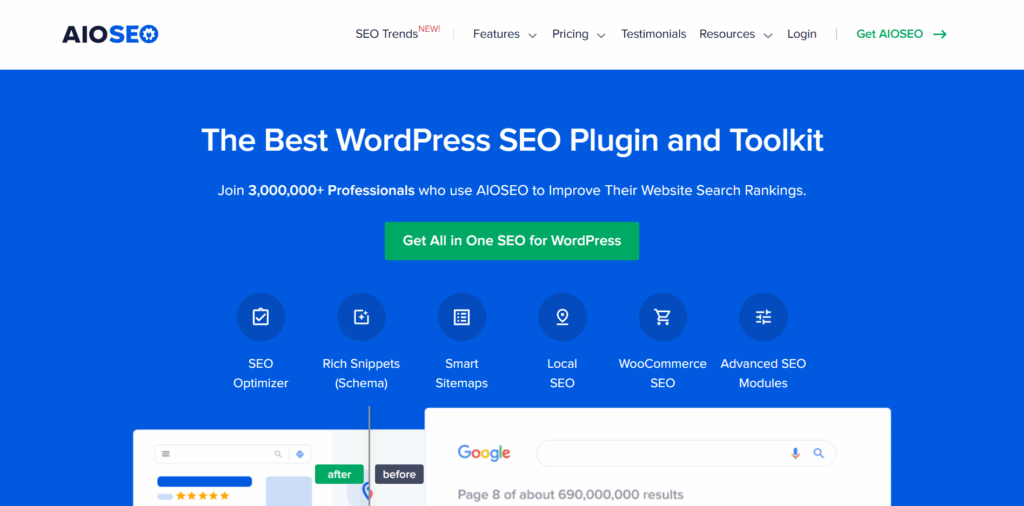
All in One SEO is a WordPress SEO plugin that includes tools for metadata, schema, sitemaps, local SEO, WooCommerce SEO, and content optimization. It can be useful for ecommerce brands that want one plugin to handle many technical SEO basics in one place.
Features:
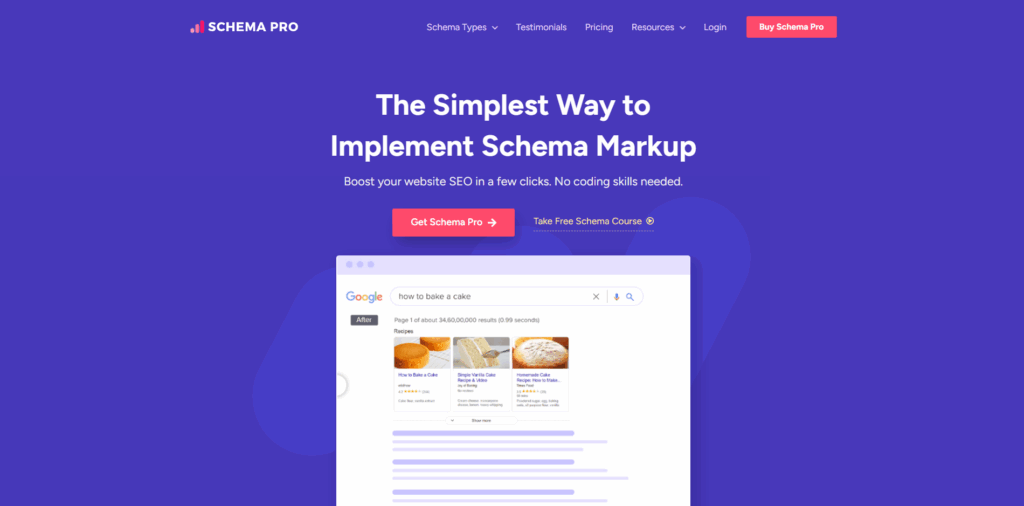
Schema Pro adds structured data to WordPress websites without custom code. This can help ecommerce stores label important content clearly so search engines and AI systems can better understand products, reviews, FAQs, articles, and other page types.
Features:
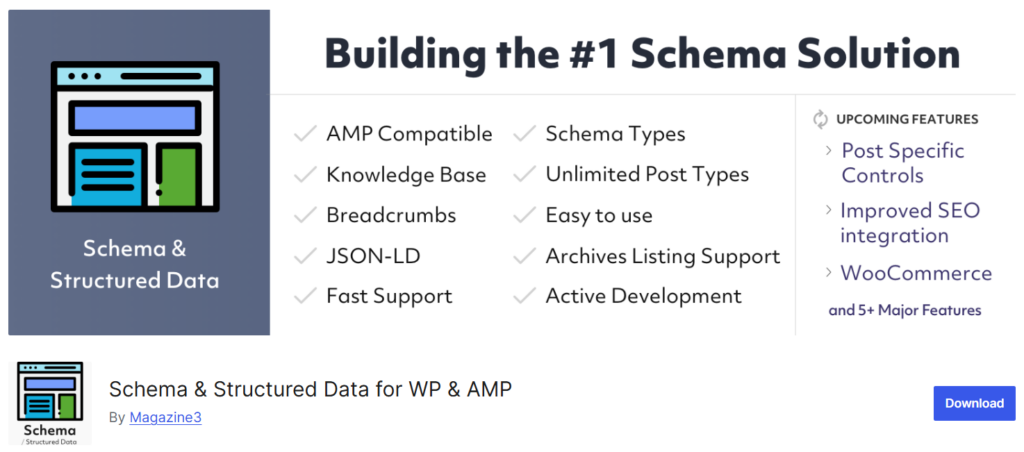
Schema & Structured Data for WP & AMP helps add rich snippet markup to WordPress websites. For ecommerce stores, this can support clearer machine-readable data across product pages, blog posts, FAQs, reviews, and other content that AI-generated answers may reference.
Features:
No. They overlap more than they compete. Clear structure, honest facts, fast load times, and schema markup tend to help your Google rankings and your chances of being cited in AI answers at the same time. The main divergence is in keyword usage, since AI tools rely less on exact keyword matching than Google does. The practical approach is to keep your SEO foundation and write more directly on top of it.
For most ecommerce stores, no. Blocking crawlers like GPTBot or CCBot keeps your products out of the models that may recommend them to shoppers. Some publishers block crawlers to protect original editorial content, but if you want AI tools to know your products, prices, and policies, allowing access is generally the better choice.
Perplexity leans heavily on live web results and shows its sources directly, so recent content, clear dates, and solid technical SEO carry more weight there. ChatGPT blends live search with its training data and tends to favor overall authority and a neutral, well-structured writing style. You don't need entirely separate strategies, since clear, credible content helps both, but focus on these areas for each platform.
It varies, and there is no guaranteed timeline. On-page changes like answer-first structure and schema can be picked up relatively quickly, while authority signals such as reviews and outside mentions typically build over weeks or months. Treat it as an ongoing process, not a one-time fix.
They can help. AI models often seek external verification before recommending a product, and reviews are among the clearest signals that an item is real and performs as advertised. A steady flow of genuine, recent reviews tends to matter more than a large but stale collection.
There is no AI version of Search Console yet, so the practical method is to ask ChatGPT, Perplexity, and Google AI to review the questions your buyers actually ask, then note whether your store appears and which competitors get cited. Repeat those checks on a regular schedule to track the trend and monitor direct and referral traffic, since some AI-driven visits may not be clearly labeled in your analytics.
If this feels like a lot, it does not have to happen all at once. The most practical approach is to start with the pages that matter most to revenue, such as top product pages, category pages, buying guides, and FAQs. AI tools often use these pages when answering customer questions. Focusing on a set of high-priority pages first tends to produce meaningful results without requiring a full site rebuild.
Start with the basics: make sure AI tools can crawl your site, understand your product information, and find clear answers to common buying questions. Once that foundation is in place, you can work on authority signals through reviews, fresh content, and outside mentions. The goal is not to chase every AI platform separately, but to make your store easier for both people and AI systems to read, trust, and recommend.
A reasonable first pass for a busy store owner looks like this:
From there, you can layer in authority and freshness work over the following months. The steps above are the same ones any store can use to make it easier for AI tools to find, understand, and recommend.
"*" indicates required fields
"*" indicates required fields
"*" indicates required fields