Running a small online store has become increasingly technical. You need to compete on Google, appear in AI-generated search results, personalize shopping experiences, manage inventory, control costs, and still serve customers well.
For small eCommerce operators, this can feel overwhelming, especially without large teams or advanced technical support. AI tools are now more accessible and practical for everyday use.
They can help improve product descriptions, support customer service, recommend products, analyze buying patterns, forecast demand, and streamline marketing. This guide covers where AI can have a practical impact and how to get started without overcomplicating your workflow.
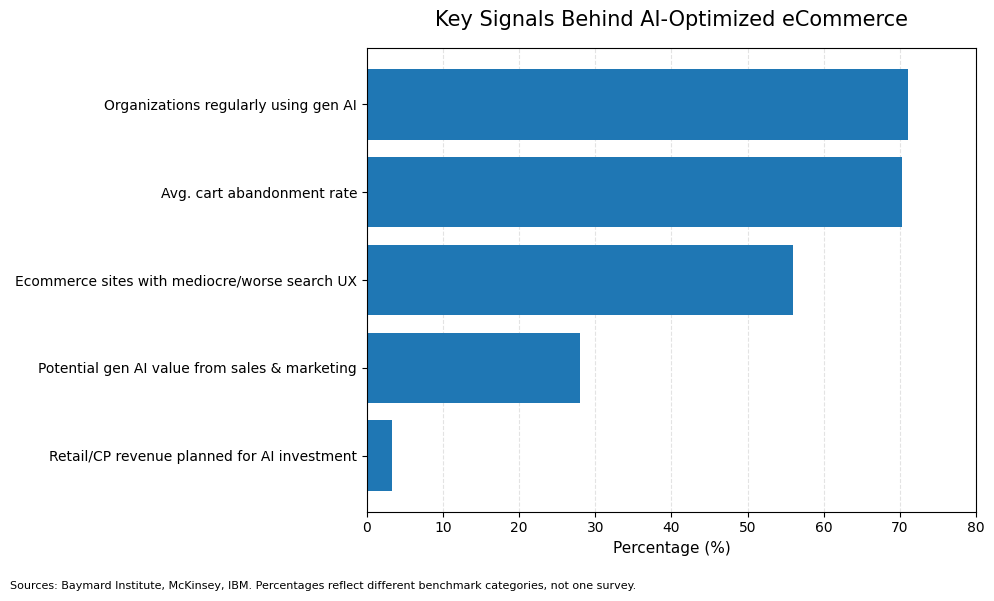
The graph shows why AI optimization is becoming relevant for eCommerce brands. AI adoption has become more mainstream, with most organizations now using generative AI in at least one business function. At the same time, eCommerce still has notable friction points, including high cart abandonment and weak on-site search experiences. These gaps create practical opportunities for small stores to improve product data, search, personalization, recommendations, and support automation.
Search behavior has shifted significantly. Shoppers increasingly use AI assistants, such as ChatGPT, Google's AI Overviews, Perplexity, and others, to research purchases before visiting any product page. According to OpenAI, ChatGPT supports product discovery through shopping integrations that surface product recommendations directly within conversations.
This matters because some early-stage purchase research happens in places where traditional SEO strategies weren't designed to work. If your product data isn't structured for AI systems to read and summarize, your store may not appear in those conversations.
At the same time, AI tools are making it more practical for small store owners to handle tasks that previously required dedicated developers or marketing agencies: writing product descriptions, managing dynamic pricing, automating customer support, and personalizing what shoppers see. The barrier to entry has dropped considerably.
Before adding any AI-powered features, make sure your product data is clean, complete, and well-structured. Accurate titles, descriptions, attributes, categories, pricing, and availability help search engines and AI systems better understand your products. This can improve traditional search visibility, AI discoverability, and the quality of product recommendations or automated content. For small eCommerce stores, strong product data underpins better rankings, clearer customer experiences, and more reliable AI-driven results.
Google's product structured data documentation describes a standardized way to mark up product pages so search engines can read and display your product information, including price, availability, reviews, and return policies. When implemented correctly, this markup can enable rich results in Google Search, which often improves click-through rates from search listings.
The core properties Google recommends for product pages include:
Most WooCommerce and Shopify stores can implement basic product schema through plugins or built-in features. The more complete and accurate your structured data, the more useful your pages tend to be to AI systems trying to match shopper queries to specific products.
ChatGPT's shopping integration, announced by OpenAI, pulls product data from across the web to surface relevant results when users ask purchase-related questions. The system relies on structured, accessible product information, which means stores without clean schema markup or a solid product feed may be at a disadvantage in these discovery channels.
Similarly, AI search engines like Google's SGE synthesize web content into summaries, meaning stores that provide clear, authoritative, and structured information are more likely to be referenced as sources for product recommendations.
Practical steps to improve your AI search presence:
Personalization in eCommerce used to mean showing a "customers also bought" widget. That's still useful, but AI-driven personalization has expanded beyond that. In 2026, it will increasingly involve adjusting the experience in real time based on individual user behavior, including predictive chatbots that guide users from discovery to checkout and dynamic layouts that highlight categories users have shown interest in.
For small store owners, the realistic version of this looks like:
Recommendation engines analyze browsing history, purchase patterns, and similar customer behavior to surface products a specific shopper is more likely to buy. Merchants commonly report that well-implemented recommendation systems contribute to average order value, though results typically vary depending on product category and implementation quality.
WooCommerce store owners can access this through WooCommerce's built-in product recommendations or through third-party plugins that add behavioral recommendation layers. The goal is to show relevant products at the right point in the shopping journey, not just on the product page, but in the cart, on the homepage, and in post-purchase emails.
AI-assisted email platforms can segment customers based on purchase behavior, browsing history, and predicted lifetime value, then trigger different messaging sequences based on where each customer is in their journey. Abandoned cart recovery is the most common use case. Still, predictive replenishment emails, win-back campaigns for lapsed customers, and product launch announcements targeted to relevant buyers are also worth considering.
Most major email platforms, such as Klaviyo, Mailchimp, Drip, and others, now include AI-driven segmentation and send-time optimization in their standard feature sets. These tools are generally accessible at small-store price points.
Poor on-site search is one of the more underappreciated conversion issues in eCommerce. Shoppers who use site search often convert at higher rates than those who browse, but only if the search returns useful results. AI-powered search tools can handle synonyms, misspellings, natural-language queries, and zero-result searches more gracefully than traditional keyword matching.
If your store is on WooCommerce, plugins like SearchWP or third-party solutions like Searchanise can enhance the default search behavior. For Shopify, native search has improved substantially, and apps like Searchpie and Boost Commerce add AI-layer capabilities.
One practical implementation note: after installing a search plugin, test edge cases such as misspellings, category-level queries, and SKU searches to confirm results are improving before assuming the tool works as expected.
One of the higher-ROI uses of AI for small eCommerce businesses is often not customer-facing. It frequently comes from reducing time spent on repetitive operational tasks. AI can help draft product descriptions, organize customer inquiries, summarize reviews, update FAQs, segment email lists, flag inventory patterns, and support basic reporting. These improvements may seem minor individually, but for many teams, they can save meaningful time each week. For lean teams, that time can often be redirected toward strategy, customer relationships, and growth.
Writing unique, useful product descriptions for dozens or hundreds of SKUs is time-consuming. AI writing tools can generate first drafts that you can refine and publish, reducing the time spent on each product. Quality matters here: AI-generated descriptions that are generic, keyword-stuffed, or obviously templated can hurt SEO and conversion rates rather than help them.
The more specific and detailed the input you give an AI tool, including product specs, target customer, common use cases, and differentiating features, the more usable the output tends to be. Treat AI-generated content as a starting draft that needs human editing, not a finished product ready to publish.
AI chatbots have advanced enough to handle a meaningful share of routine customer inquiries, including order status, return policies, product questions, and shipping estimates. For small stores, a practical approach is to use an AI chatbot for FAQ-style questions and policy-based inquiries, while routing anything requiring judgment or relationship management to a human. This can reduce support volume without sacrificing customer experience on the interactions that matter most.
One implementation consideration worth noting is that chatbot performance depends heavily on the quality of the content it draws from. A chatbot built on incomplete or outdated FAQs will frustrate customers instead of helping them. Before deploying one, audit your support documentation to ensure it accurately reflects current policies.
AI tools can analyze sales velocity, seasonal patterns, and supplier lead times to help predict when to reorder and how much to order. For stores that have historically relied on intuition for inventory decisions, even basic AI-assisted forecasting can reduce both stockouts and overstock.
On pricing, dynamic pricing tools use competitor pricing data, demand signals, and margin targets to suggest or automatically adjust prices. This area is worth approaching carefully; automated repricing can affect customer trust if shoppers notice prices changing frequently or in ways that feel inconsistent.
Traditional SEO optimizing for organic search listings is still relevant, but it's no longer the complete picture. The landscape has shifted toward what's often called "Generative Engine Optimization" (GEO), where AI models analyze the context behind queries rather than just matching keywords.
For a small eCommerce store, this means a few things worth paying attention to:
AI search engines generally interpret intent better than traditional keyword-matching algorithms. A product page that explains what a product does, who it's for, when you'd use it, and how it compares to alternatives tends to be more useful to an AI summarization engine than a page that repeats the target keyword multiple times.
In practice, this means writing product descriptions and category pages as if you're explaining the product to a knowledgeable friend, covering use cases, limitations, and specific customer scenarios. Including the answers to questions your support team hears regularly is often a useful starting point.
AI systems tend to favor sources that demonstrate expertise and trustworthiness. For eCommerce, this typically includes:
These aren't new SEO concepts, but they're increasingly important as AI systems assess which sources are worth surfacing to users.
A well-maintained product feed submitted to Google Merchant Center, kept current with pricing and availability, and enriched with detailed product attributes, can improve visibility in AI-assisted shopping results across multiple platforms. This applies whether you're running a small boutique or a larger catalog operation.
Product feed best practices:
AI optimization efforts can be easy to implement but harder to measure without defined success criteria from the start. Before adding new tools, establish baseline metrics for the areas you want to improve. These may include conversion rate, average order value, cart abandonment rate, organic search traffic, customer support ticket volume, email revenue, and product recommendation performance. Clear starting numbers make it easier to tell whether a change is actually helping.
The goal is not to confirm that AI tools work in general. The goal is to identify which specific changes are helping your store generate better results. For example, evaluate an AI product recommendation widget based on clicks, conversions, and additional revenue. A chatbot should reduce support tickets and improve response times. Compare AI-generated email flows against manual campaigns over time.
Key measurement points to track include:
Review these numbers regularly rather than relying on assumptions. Small improvements, fewer support tickets, higher email engagement, and a modest increase in average order value can compound into meaningful growth for a small store over time.
Trying to implement every AI tool at once can become overwhelming, especially for small eCommerce teams with limited time and budget. A more manageable approach is to start with the areas that create the strongest foundation first, then add more advanced tools once your store data, product pages, and basic customer journey are already working well. AI tends to perform better when it has clean, accurate information to work from, so improving the quality of your product data, structured markup, and product feed before adding personalization or automation tools is generally time well spent.
A practical starting point is to focus on the parts of your store that most directly affect visibility and conversions. Begin with your product pages, because they influence how search engines, AI systems, and customers understand what you sell. Then move on to tools that can improve revenue, such as recommendation widgets, abandoned-cart recovery, and email segmentation. This step-by-step approach can help avoid spending on advanced AI features before your store is ready to benefit from them.
Recommended sequence:
The goal is not to make your store feel fully automated overnight. The goal is to build a more efficient, easier-to-understand shopping experience that helps both customers and AI systems find the right information faster. Following a practical sequence can lead to steady improvements without overcomplicating your workflow or investing in tools your store isn't ready to use yet.
The right plugin or app can help small eCommerce stores improve search visibility, personalize the shopping experience, automate support, strengthen product feeds, and use customer data better. The tools below include options for WooCommerce and Shopify stores, covering structured data, product recommendations, email automation, search, reviews, customer support, and feed optimization.
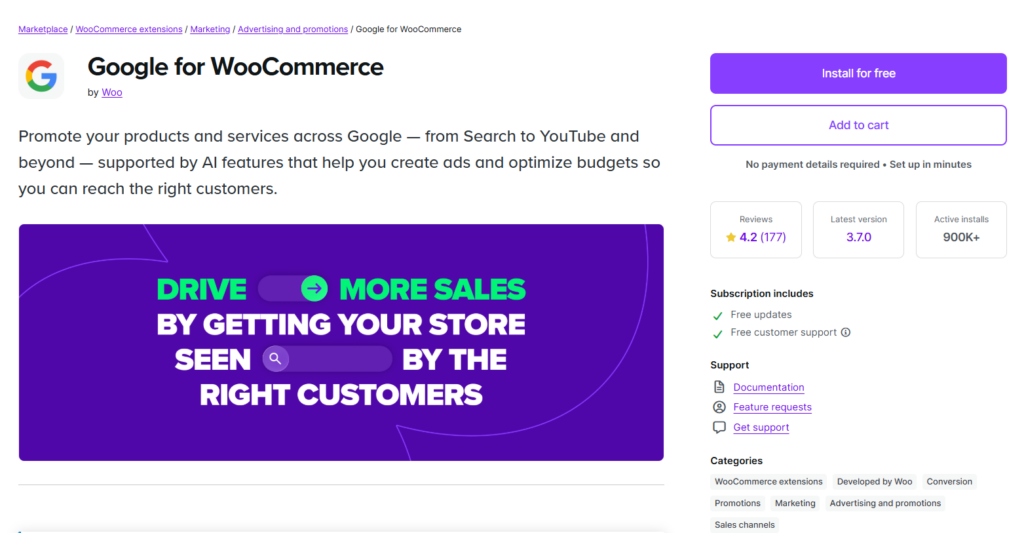
WooCommerce Google Listings & Ads helps WooCommerce stores connect their product catalog to Google Merchant Center and Google Shopping surfaces. It is useful for stores that want to keep product data, pricing, and availability visible across Google's shopping ecosystem.
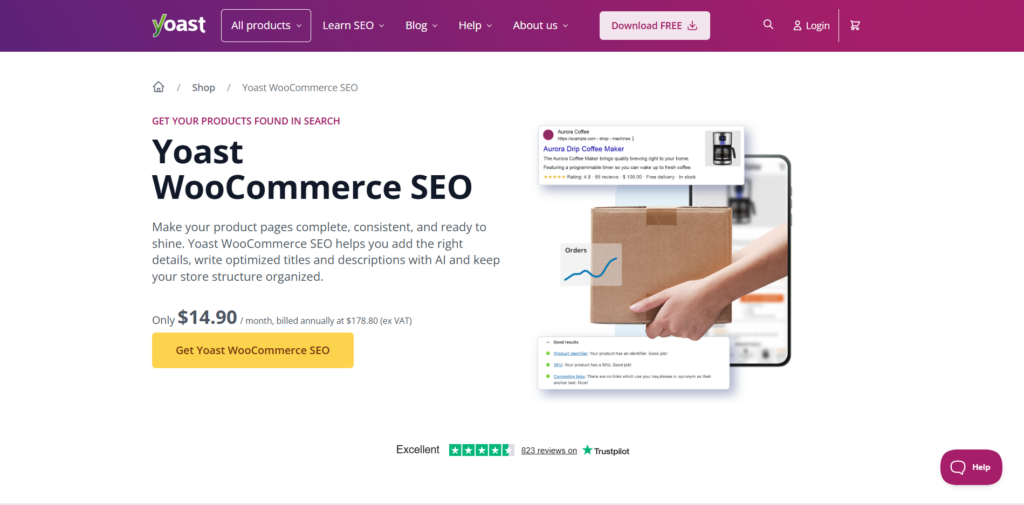
Yoast WooCommerce SEO improves the structure of WooCommerce product pages for search engines. It optimizes product metadata, breadcrumbs, schema, and content presentation so Google and AI-driven search systems can better understand your products.
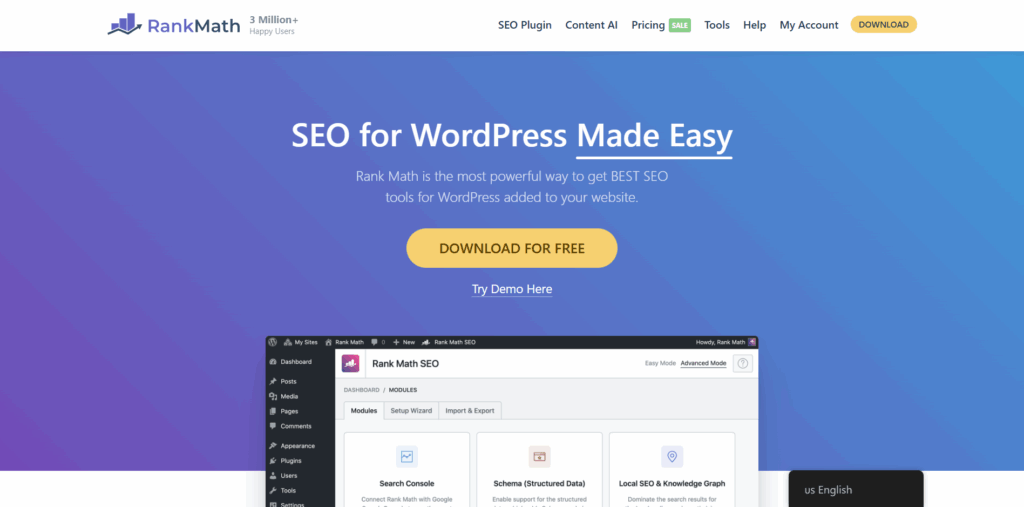
Rank Math SEO is a WordPress SEO plugin with WooCommerce support, schema options, and content optimization tools. It helps store owners improve product page metadata, structured data, and search visibility without custom code.

Schema Pro helps WordPress and WooCommerce sites add structured data without manual coding. For eCommerce stores, it can support clearer product, review, FAQ, and business information markup, which can improve eligibility for rich results in search.
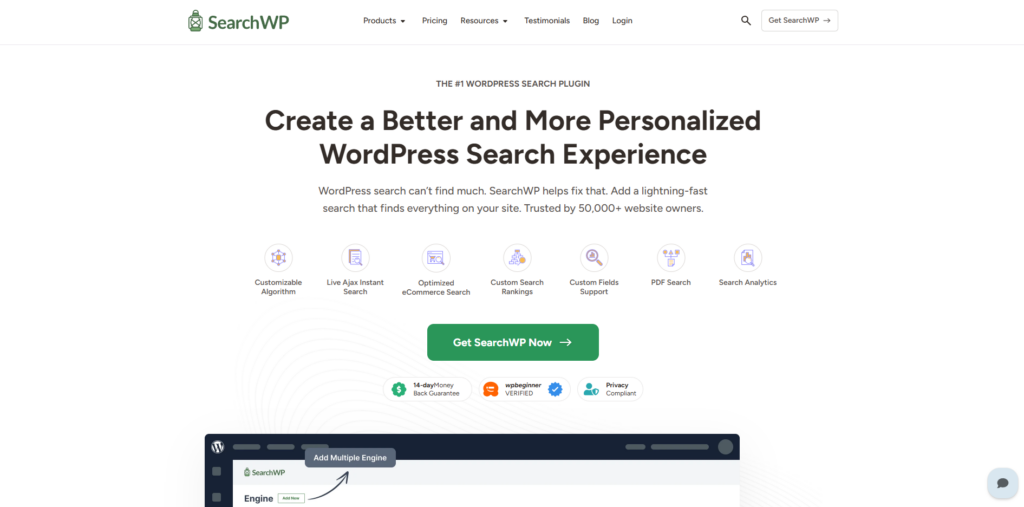
SearchWP improves the default WordPress and WooCommerce search experience by making product content, custom fields, SKUs, and attributes easier to search. This can help stores where shoppers rely on search to find specific products.
AI tools can help a well-run store perform better, but they are not a shortcut for fixing deeper business problems. If a store has weak product-market fit, unclear pricing, poor product pages, or a frustrating checkout process, AI will often surface those issues rather than resolve them. Stores that tend to benefit most from AI optimization already have a reasonable foundation: a clean, complete product catalog, a working checkout flow, reliable product information, some existing traffic, and a basic understanding of their customers.
Most improvements from AI are incremental rather than dramatic. However, those incremental improvements can still add up meaningfully over time. A better product recommendation, faster support response, improved email subject line, stronger product description, or more accurate search results can each improve performance. Modest gains in conversion rate, support efficiency, email engagement, and search visibility are all realistic outcomes for a small store that approaches AI optimization methodically.
If you run a WooCommerce or Shopify store and want to apply these ideas, a useful starting point is a quick audit of your product data. Review your top 10 products, test them with Google's Rich Results Test, and identify what structured data is missing. This exercise can reveal practical improvements, incomplete product details, missing reviews, unclear pricing, or weak schema markup without requiring a large time investment.
For stores with larger catalogs, a more detailed review may be worth pursuing. An agency or consultant with experience in eCommerce SEO and conversion optimization can help identify where AI optimization fits within your broader strategy and which updates are most likely to have the greatest impact first.
AI-assisted search will continue to evolve, but the foundational work holds up well over time. Clean product data, useful content, clear trust signals, and well-structured pages can improve visibility, support better customer decisions, and strengthen your store, no matter how search continues to change.

"*" indicates required fields
"*" indicates required fields
"*" indicates required fields