For small and mid-size online store owners looking to use AI without the hype, it can be difficult to separate practical tools from exaggerated promises. Every week, a new platform claims it can transform your store overnight through smarter product recommendations, automated email flows, predictive analytics, dynamic offers, or personalized shopping experiences. The claims often sound impressive, but many are built around large brands, bigger budgets, and ideal case studies that may not reflect everyday eCommerce operations.
This article takes a more realistic look at AI personalization and where it actually helps. Instead of focusing on buzzwords, it explains what AI personalization does, how it can support smaller teams, and where it may improve product discovery, customer engagement, and repeat purchases. It also looks at which tools or features may not be worth the cost, complexity, or setup time right now.
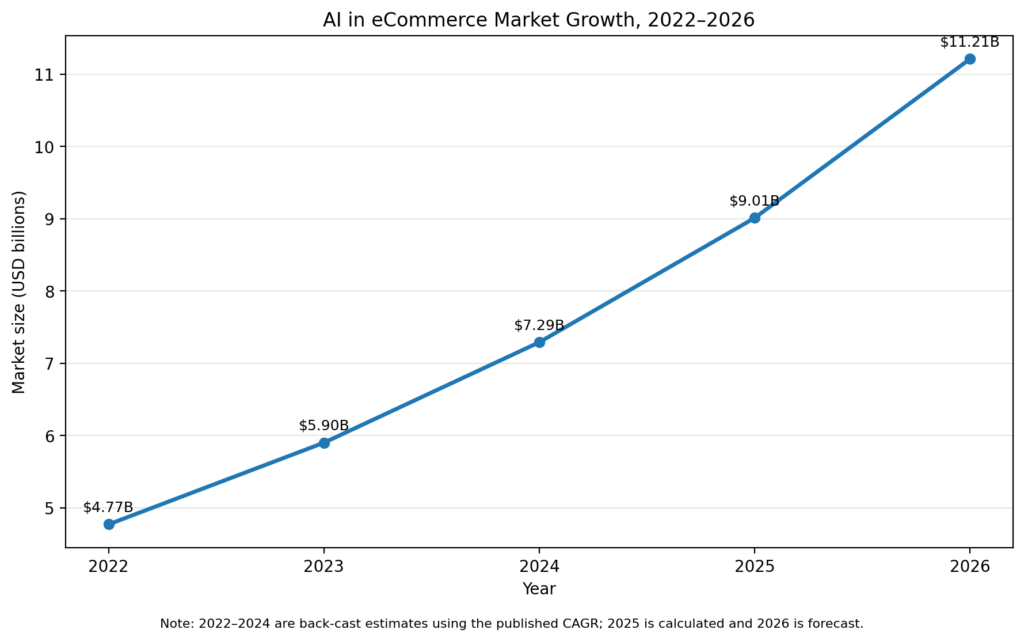
The graph shows steady growth in AI in the eCommerce market from 2022 to 2026, highlighting how personalization tools such as product recommendations, smarter search, targeted offers, and automated customer messaging are becoming more important for online stores.
Shoppers now expect online stores to feel more relevant to their needs because large platforms have made personalization part of the normal buying experience. According to McKinsey’s report Next in Personalization, 71% of consumers expect companies to deliver personalized interactions, while 76% feel frustrated when they don't. For small online stores, this creates both pressure and opportunity.
You may not have Amazon’s budget, data, or technology stack, but focused personalization tools can still help your store feel more useful and customer-aware than a basic product catalog. The real challenge is knowing where to start and which personalization efforts to prioritize.
This is the most mature and accessible application for small stores. AI-powered recommendation engines analyze browsing history, purchase patterns, and product relationships to surface items shoppers are more likely to buy. When implemented thoughtfully, this can help increase average order value and repeat purchases over time.
Most WooCommerce- and Shopify-based stores can access recommendation functionality through plugins or built-in features without an enterprise-level investment. The key is making sure the recommendations are actually relevant. “Customers also viewed” blocks populated with unrelated items can hurt trust more than help conversion. Input data quality matters as much as the algorithm itself.
Worth noting on the implementation side: recommendation engines typically require a meaningful volume of transaction history to perform well. Stores with fewer than a few hundred completed orders may find that rule-based recommendations (manually grouping related products or frequent add-ons) outperform AI-driven suggestions in the early stages, simply because there isn’t enough behavioral signal to train on yet.
Google Cloud Retail documentation describes recommendation systems that use real-time signals, including what a user just browsed, what’s in their cart, and past purchase history, to generate contextually relevant suggestions. Even simplified versions of this logic, available in many off-the-shelf tools, can perform reasonably well for stores with sufficient transaction history.
Search is often the highest-intent interaction on your site. A shopper who types something into your search bar wants to find it fast. AI-enhanced search can handle typos, synonyms, and natural language queries more gracefully than keyword-only matching.
For stores with more than a few hundred SKUs, improving search relevance often has an outsized effect on conversion. Research from Econsultancy and a separate analysis from Forrester have both found that shoppers who use site search convert at significantly higher rates than those who browse without it, with some studies reporting conversion rates two to three times higher. Personalized search, which factors in a user’s browsing and purchase history to rank results, can take this a step further.
One practical consideration: if your product catalog has inconsistent naming conventions, missing attributes, or poorly written descriptions, AI-enhanced search will struggle, regardless of the tool’s capabilities. Cleaning up product data is often a more valuable first investment than upgrading the search engine itself.
This is an area where even moderate investment can pay off, particularly for stores with complex catalogs or products that shoppers describe in varied ways.
Sending the same 15%-off coupon to every customer on your list is easy to execute but increasingly ineffective. AI-assisted segmentation lets you identify customer groups based on behavior, purchase frequency, and product affinity, then target them with offers more likely to convert.
A case study from McKinsey’s Personalization at Scale research found that one North American retailer saw roughly a 3% boost in annualized margins after shifting from mass promotions to targeted offers over a three-month pilot. That result came from a large retail operation, and results on a smaller scale will vary. For smaller stores, the more immediate benefit is often avoiding unnecessary margin erosion by not discounting to customers who would have purchased at full price anyway.
Segmentation doesn’t require sophisticated AI to be useful. Even basic behavioral groupings, such as separating first-time visitors from repeat buyers, or identifying customers who haven’t purchased in 90 days, can inform significantly better promotional strategies than blanket email blasts.
AI tools can now help you generate and test personalized content at a scale that wasn’t practical before. This includes subject line variations based on a customer’s past behavior, product-specific follow-ups after a browsing session, and cart-abandonment sequences that reference the specific items left in the cart.
Adobe’s annual Digital Trends report has consistently found that personalized communication, particularly email, drives higher engagement than generic campaigns, with personalization ranking among the top priorities cited by experience-focused marketing teams. For smaller stores, the practical application is less about sophisticated AI generation and more about using behavioral triggers effectively: the right message to the right person at the right moment, even if the content itself is relatively simple.
Generative AI can help here by reducing the time required to generate variations. Instead of drafting one email campaign, you can produce segmented versions for different customer types without a proportional increase in copywriting time. That said, AI-generated email copy still benefits from human review before sending, particularly for tone and brand voice consistency.
It’s worth being clear-eyed about the evidence base. Much of the data on AI personalization comes from large enterprise deployments with dedicated data science teams and extensive historical data. The results don’t always translate directly to a store running on a shared hosting plan with two years of transaction history.
That said, the directional findings are consistent across studies:
A 2025 study on technology-mediated personalization published in Computers in Human Behavior (via ScienceDirect) also noted the importance of perceived relevance and transparency. Shoppers respond better to personalization that they understand or can attribute to their own behavior. Recommendations framed as “based on your recent purchases” tend to perform better than anonymous algorithmic suggestions with no context.
AI personalization works best when it solves a clear business problem, uses clean data, and is measured properly. Without those basics, even a capable tool can produce weak results or create a shopping experience that feels confusing, random, or too intrusive.
One common pattern is starting with the technology rather than the problem. Implementing a recommendation engine because it sounds impressive is different from implementing one because cart abandonment is costing you measurable revenue. The starting point should always be a specific, measurable business problem, not a feature.
Data quality is a related issue that gets overlooked. AI personalization is only as good as the data it runs on. Duplicate customer records, incomplete order histories, and poorly categorized products will degrade results regardless of the underlying tool’s capabilities. Cleaning up your product and customer data is often a better first investment than upgrading the personalization layer.
Over-personalizing too fast creates a different kind of problem. Showing a returning customer a personalized homepage the moment they arrive can feel helpful. Referencing highly specific past behavior in unexpected contexts can feel intrusive. Customers tend to be comfortable with personalization where they expect it, such as search, recommendations, and cart, and less so where it surprises them.
Finally, many stores implement personalization features without establishing a baseline or running controlled tests. Without measurement, it’s difficult to tell what’s working, and underperforming features can run unnoticed for an indefinite period. Treat every personalization change as an experiment with a defined success metric before you expand it.
If you run a WooCommerce or similar online store, focus on small, measurable improvements rather than personalizing the entire shopping experience at once. Starting with areas that already show clear buying intent, such as search, cart pages, checkout, and email follow-ups, is easier to test and typically requires less technical setup.
Personalization works better as a gradual process than as a full-scale launch. You can make many improvements with built-in eCommerce tools, affordable plugins, or basic customer segmentation. Testing one change at a time and measuring results before expanding tends to produce more reliable outcomes than deploying multiple features simultaneously.
The following plugins and apps can help store owners test AI personalization in practical ways, including product recommendations, smarter search, upsells, segmentation, email automation, and personalized on-site experiences. Before installing any tool, review its pricing, platform compatibility, data requirements, and performance impact on page load speed, as some personalization scripts can add meaningful overhead.
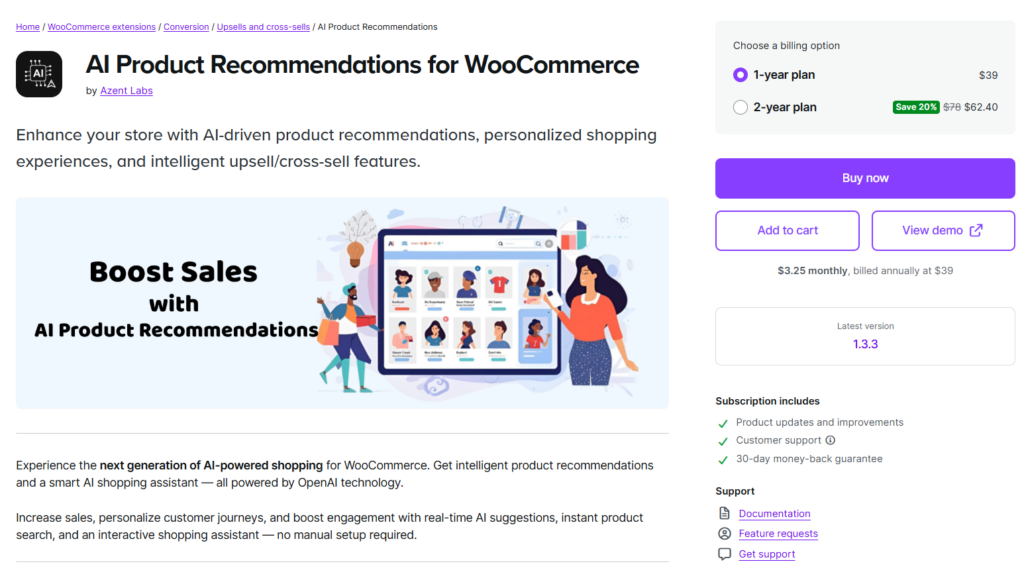
AI Product Recommendations for WooCommerce helps store owners display personalized product suggestions based on shopper behavior, product relationships, and customer activity. It helps stores improve product discovery, cross-sells, and upsells without building a custom recommendation engine.
Key features:
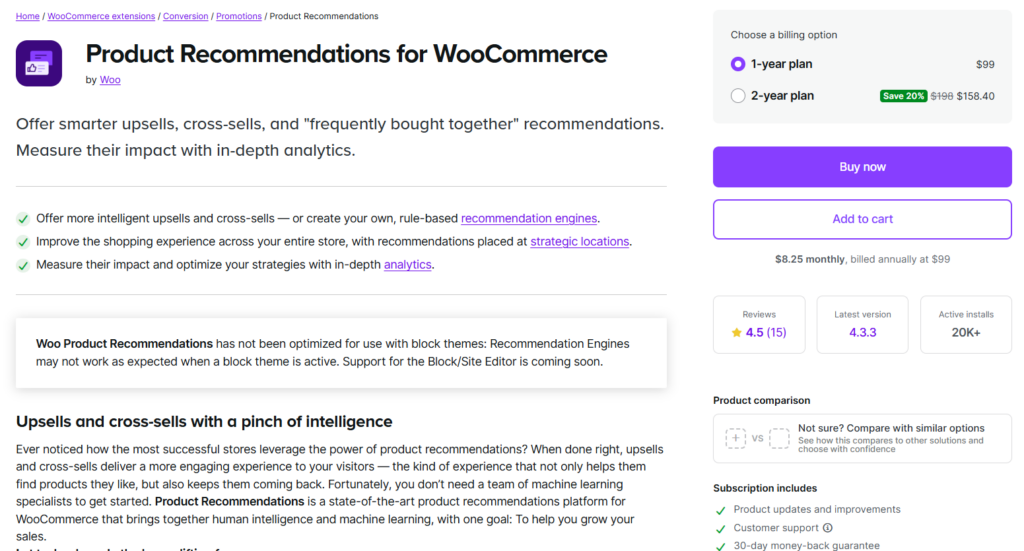
Product Recommendations for WooCommerce allows store owners to create recommendation engines using rules, filters, and product conditions. It is a practical option for stores that want more control over where and how related products, frequently bought together items, or custom recommendations appear.
Key features:
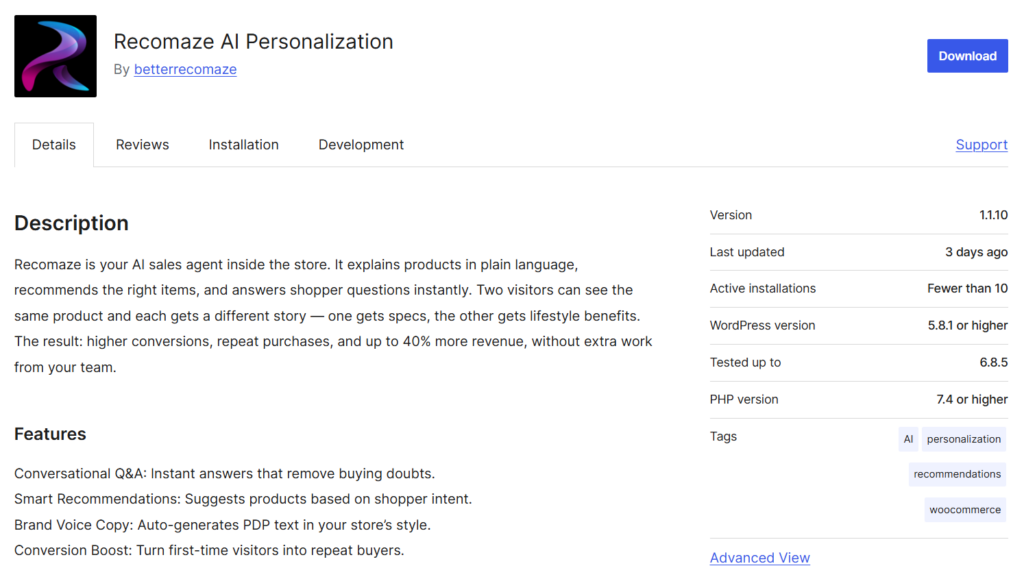
Recomaze AI Personalization is designed to serve as an AI sales assistant within a WooCommerce store. It can help explain products, answer shopper questions, and recommend relevant items based on customer needs, making it potentially useful for stores with products that require more guidance before purchase.
Key features:
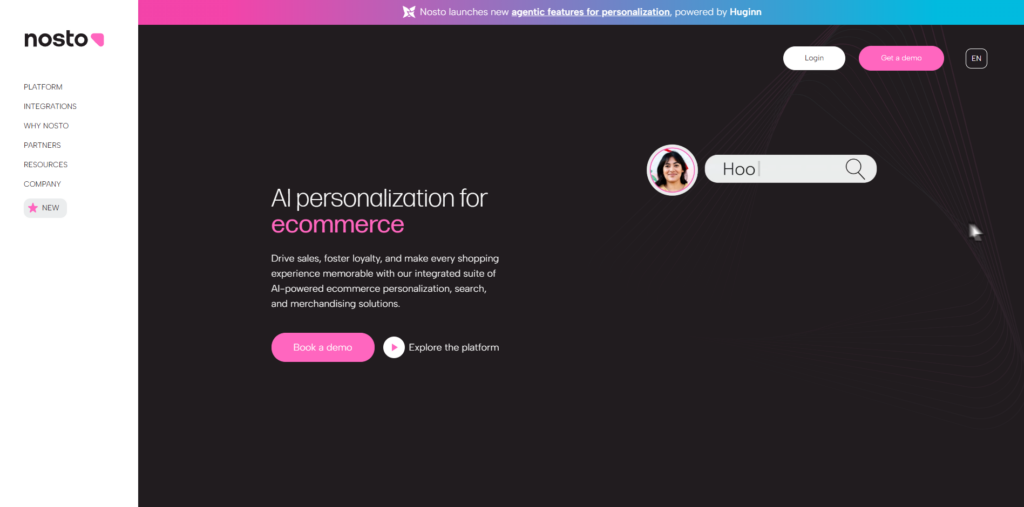
Nosto is an AI-powered commerce experience platform that supports personalization across search, product recommendations, merchandising, and content. It suits stores that need broader personalization across multiple touchpoints and is better matched to growing or scaling operations than to stores just starting out.
Key features:
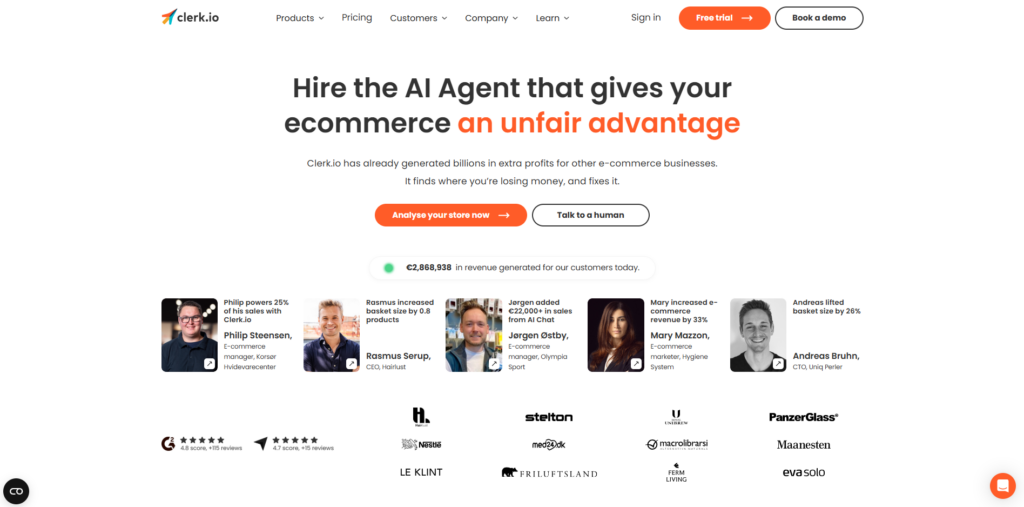
Clerk.io provides product recommendations, search, email personalization, and audience segmentation for eCommerce stores. It can help WooCommerce merchants connect personalization with both on-site shopping behavior and marketing automation.
Key features:
AI personalization in eCommerce isn’t a single switch you flip. It’s a set of capabilities that develop over time, starting with clean data and clear goals, then expanding as you learn what moves metrics for your store and customer base.
Stores that see consistent value from personalization typically share one characteristic: they treat it as an ongoing process of testing and refinement, not a one-time implementation. The underlying technology has become more accessible, but the discipline of measuring, iterating, and improving remains the differentiator.
If you’re evaluating where to invest next in your store’s marketing and conversion capabilities, personalization is worth exploring carefully. Start smaller than you think you need to, measure everything you can, and be cautious of any tool that promises transformational results without clearly explaining what that requires in terms of data, traffic volume, and ongoing maintenance.
"*" indicates required fields
"*" indicates required fields
"*" indicates required fields